Summary
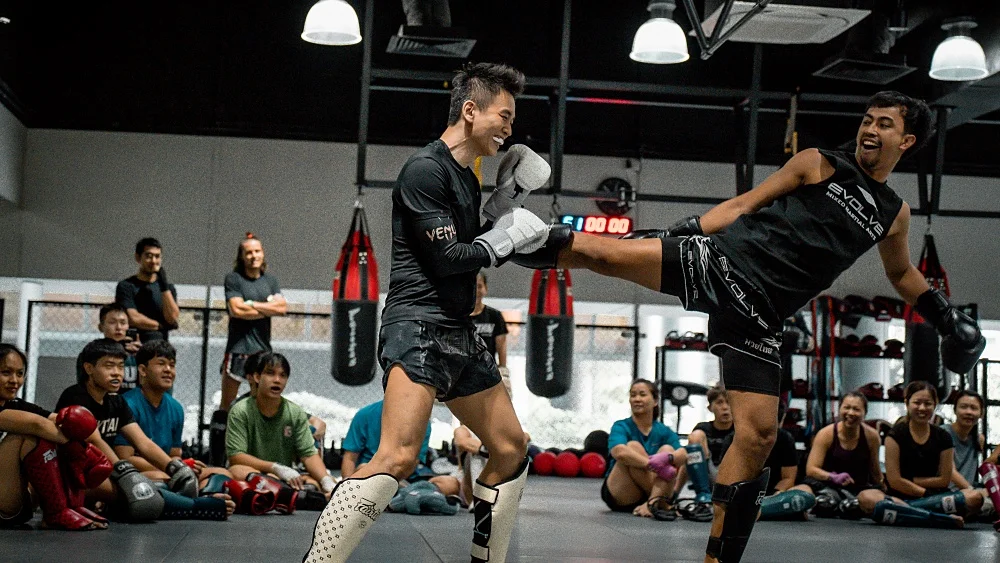
Sparring is one of the most valuable tools in Muay Thai training, and one of the easiest to misuse. Done correctly, it accelerates technical development, builds fight-ready timing, and creates the kind of pressure-tested confidence that no drill or bag session can replicate. Done poorly, it produces injuries, bad habits, and a training environment where nobody wants to work with you. The difference between productive sparring and destructive sparring almost always comes down to etiquette: the unwritten and written rules that govern how training partners treat each other inside the ring. This article covers 11 essential points of Muay Thai sparring etiquette, from showing respect before and after rounds to controlling power, adjusting to your training partner‘s level, and maintaining the hygiene standards that keep a gym a place people actually want to train in. These principles apply equally to beginners stepping into their first light sparring session and to experienced fighters preparing for competition. As Muay Thai World Champion and Evolve MMA instructor Chaowalit Jocky Gym puts it, “The way you spar tells me everything about the kind of fighter and the kind of person you are. Respect your partner, control your ego, and treat every sparring session as a chance to learn, not a fight to win. That is how champions are made in the gym.” Follow these 11 points, and every sparring session becomes a step forward.
1) Respect For Sparring Partners And Trainers
Greetings and acknowledgement are signs of respect taught from the very beginning in all martial arts, and Muay Thai is no different. Before and after sparring rounds, there are ways to show respect. Touching gloves is the way in most combat sports to show respect before a fight, and should also be used before sparring.
After sparring, the use of the wai is used. In Thailand, this hand gesture, accompanied by a slight bow, is a high form of respect. The palms come together in a prayer-like gesture showing respect. This gesture originates from India, where it is known as the Añjali Mudrā, which is used in Buddhism and Hinduism.
Respect for your trainers should be a given, as they are there to teach you and help you to attain a higher level of proficiency and to guide you.
2) Safety Gear

Proper safety gear is always a good idea when used properly during sparring sessions.
The proper safety gear consists of:
3) Use Big Gloves

Although using big gloves could fall under the safety gear section, it needs to be emphasized in a way that shows the importance of using bigger gloves when sparring in Muay Thai. The last thing you want to do is spar with 4-oz gloves like the ones used in actual fights.
This is one time when bigger is better, so use 14 or 16-oz gloves for sparring. It not only protects you and your sparring partner but it will feel like you are bare-knuckled when you put on the smaller gloves when it’s time to fight.
4) Communication
The impact of proper communication cannot be underestimated. Communicate with your sparring partner to make sure that they know if you have limitations or if there are certain things you would like to train. Take a moment to do this before sparring. Communication before, during, and after yields the highest results from your sparring sessions.
5) Control Your Power
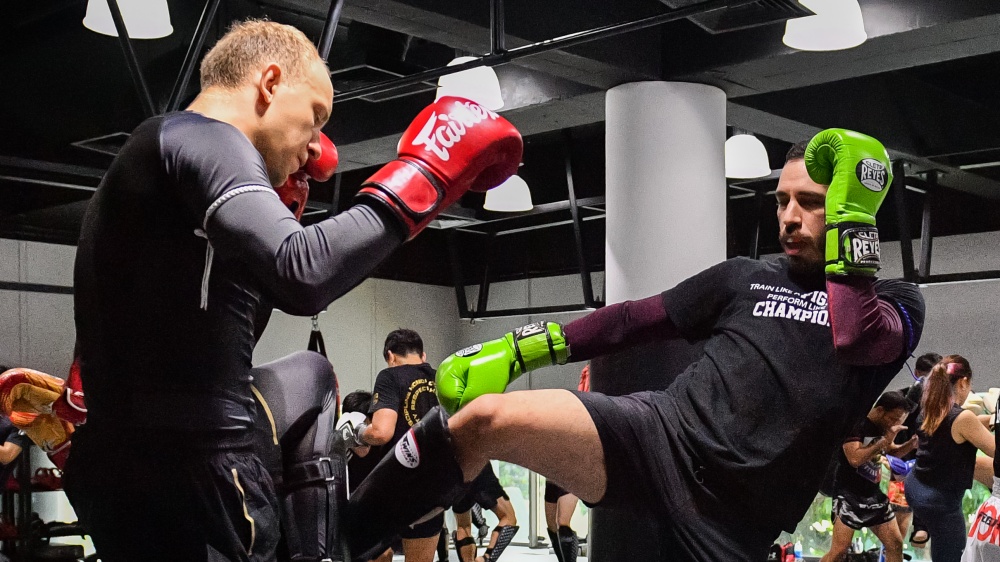
Controlling your power means that you are sparring intelligently and are working to learn and improve your techniques. You don’t want to damage your training partner with your most powerful punches and kicks.
6) Don’t Go For Knockouts
Falling in line with power control is one that seems to be overlooked sometimes with beginners, and that is, don’t go for knockouts. This is not a fight that needs to be won, so trying to take the head off of your partner is not necessary and just shows a lack of control.
7) Keep Your Ego in Check
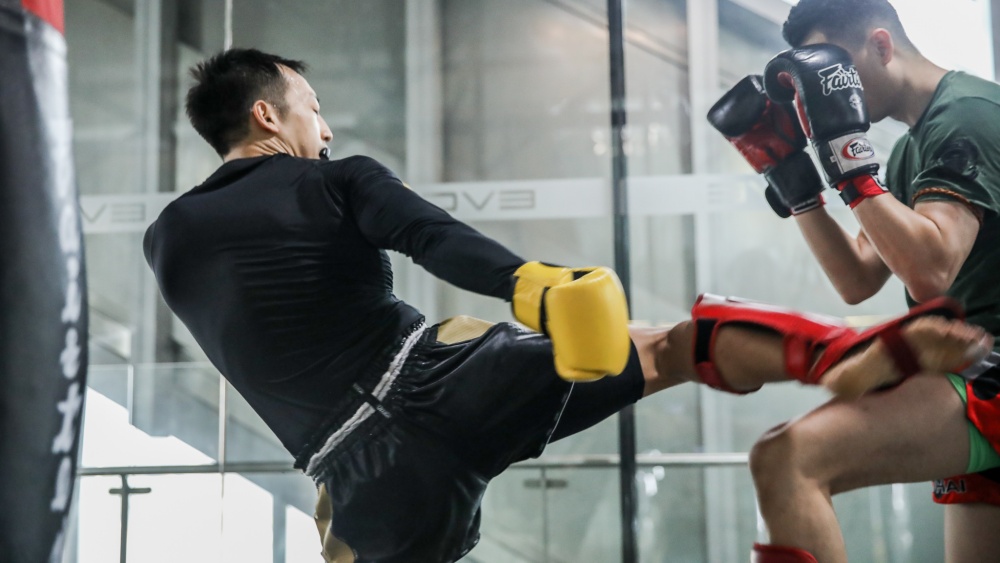
Put your ego at the door. You are sparring to learn, to develop technique, and to find places in your fight game that might need work. You want to use your sparring sessions to improve your overall performance when it’s time to crawl into the ring.
8) No Elbows
Elbow strikes are one of the most devastating and dangerous strikes in Muay Thai, and not using them in sparring is plain common sense. The bottom line is that throwing elbows would certainly injure your partner and should be avoided during sparring sessions.
9) Adjust To Partner’s Skill Level
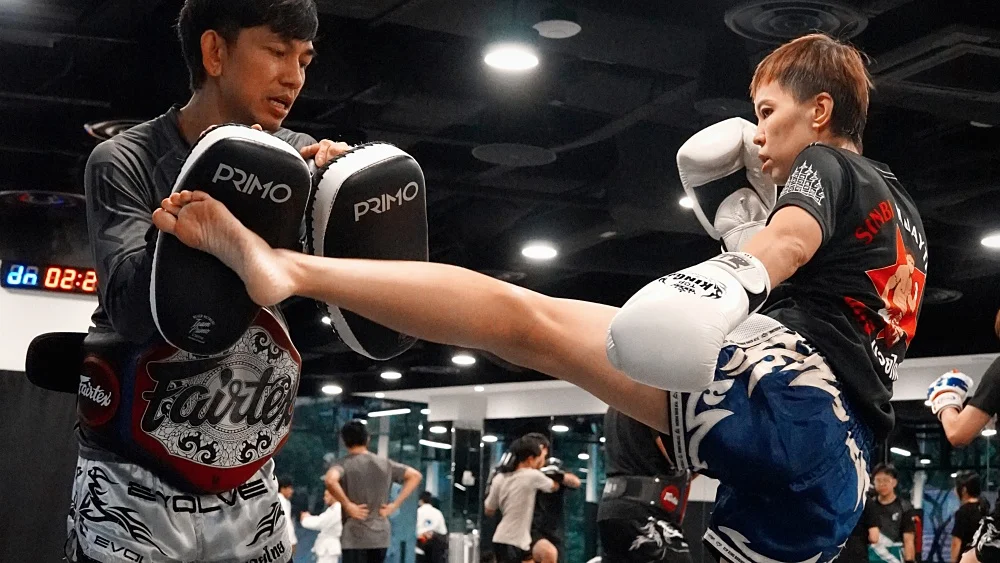
You’re not always going to be sparring with someone who is as skilled as you are, so adjusting the level of sparring to your sparring partner is necessary in order to help them learn and develop the skills they need to become better Muay Thai fighters.
10) Safety Precautions
While sparring, it’s essential to prioritize safety to prevent potential harm. Be proactive in addressing any situations that may arise to safeguard your well-being and ensure longevity in your Muay Thai journey.
11) Hygiene
On a more personal level, proper hygiene is one of the nicest things you can do before a sparring session. Nobody wants to train with someone who doesn’t use proper hygiene.
Trim your toenails, shower, and wash your gear occasionally; it benefits everyone.
Frequently Asked Questions About Muay Thai Sparring Etiquette
Q: How Hard Should I Be Hitting In Muay Thai Sparring?
A: The appropriate intensity depends on the context of the session, your experience level, and what you and your partner have agreed on beforehand, which is exactly why communication before sparring is so important. As a general rule, beginner sparring should involve light, controlled contact where the emphasis is entirely on technique and timing rather than power. Intermediate and advanced sparring can involve harder contact, but even then, full power is reserved for actual competition. The benchmark most experienced coaches use is simple: if your partner cannot train tomorrow because of what you did to them today, you went too hard. Sparring should build both partners up, not break them down.
Q: What Is The Wai And Why Is It Used In Muay Thai Sparring?
A: The wai is a traditional Thai gesture of respect in which the palms are pressed together in a prayer-like position, accompanied by a slight bow. It originates from the Añjali Mudrā, a gesture used in Buddhism and Hinduism, and has been part of Thai culture and Muay Thai tradition for centuries. In the context of sparring, the wai is typically performed after rounds as an acknowledgement of gratitude and respect toward your training partner. It is one of the most visible expressions of the values — humility, respect, and discipline — that Muay Thai is built on, and performing it sincerely rather than perfunctorily matters in a traditional training environment.
Q: Why Are Elbows Banned In Most Muay Thai Sparring Sessions?
A: Elbows are among the most dangerous weapons in Muay Thai — capable of opening deep lacerations with minimal force and causing serious injury even with controlled contact. Unlike punches and kicks, where gloves and shin guards provide meaningful protection, there is no practical protective equipment that adequately mitigates elbow strikes in sparring. The risk of cutting a training partner, causing a concussion, or inflicting an injury that ends their training is simply too high to justify using elbows in most sparring contexts. Some gyms do allow controlled elbow sparring for advanced fighters using specific protective gear, but this is the exception rather than the rule and should only happen with explicit agreement from both partners and a supervising coach.
Q: How Should A More Experienced Fighter Approach Sparring With A beginner?
A: A more experienced fighter sparring with a beginner has a responsibility to calibrate their intensity significantly downward — not as a courtesy, but as an active training choice that benefits both partners. For the beginner, a controlled, technical sparring partner who introduces pressure gradually and gives them space to work is enormously more valuable than one who overwhelms them. For the experienced fighter, deliberately restraining power and focusing on precision, footwork, and technical problem-solving against a less challenging opponent is a legitimate and valuable form of practice. The worst thing an experienced fighter can do with a beginner is go hard — it teaches the beginner nothing, risks injuring them, and reflects poorly on the experienced fighter’s understanding of what sparring is for.
Q: What Should I Do If My Sparring Partner Is Going Too Hard?
A: Stop the round and communicate directly. There is no obligation to absorb punishment in a training session, and a good training environment is one where raising a concern like this is normal and respected rather than seen as a weakness. Calmly let your partner know that the intensity is too high for what you had agreed on, and either reset the round at a lower intensity or end the session if the behaviour continues. If the issue persists across multiple sessions, bring it to a coach. Every gym has a responsibility to maintain a training culture where sparring is productive and safe, and coaches want to know when that standard is not being met.
Q: Is Headgear Necessary For Muay Thai Sparring?
A: Headgear is listed as optional in most Muay Thai sparring contexts, and opinion among coaches and fighters is genuinely divided on its value. Headgear does provide meaningful protection against cuts and reduces the impact of glancing blows, which is why many gyms require it for beginner sparring. However, it also reduces peripheral vision and can create a false sense of security that leads to less head movement and worse defensive habits over time. Many experienced fighters prefer to spar without headgear at controlled intensities, relying on technique and movement rather than padding. The most sensible approach for beginners is to use headgear while learning, and to discuss with your coach when and whether to transition away from it as your experience grows.
Q: How Often Should Beginners Spar In Muay Thai?
A: For most beginners, one sparring session per week is sufficient in the early months of training. Sparring before foundational techniques are reasonably solid tends to reinforce bad habits rather than develop good ones — you end up repeating whatever movement patterns you fall back on under pressure, which are usually not the correct ones. Building technical proficiency through drilling, pad work, and bag work first gives you something worth testing in sparring. As your technique and conditioning develop, increasing sparring frequency to two or three times per week is appropriate, but always within the framework of the etiquette in this article. Quality of sparring sessions matters far more than quantity.
Final Thoughts
Sparring is where Muay Thai becomes real, where the techniques drilled on pads and bags are tested against a moving, reacting, thinking opponent. That process is irreplaceable, and no amount of drilling can fully substitute for it. But sparring is only as valuable as the environment in which it takes place, and that environment is built entirely by the behaviour and attitudes of the people inside it.
The 11 points of etiquette in this article are not bureaucratic rules designed to limit what happens in sparring. They are the conditions that make good sparring possible — that allow both partners to push each other technically without risking injury, to work on weaknesses without fear of being exploited recklessly, and to leave each session having genuinely improved rather than simply survived it.
Follow them consistently, hold yourself to them even when your partner does not, and you will become the kind of training partner every fighter in your gym wants to work with — and the kind of fighter that the best sparring partners make better.
You may also like:
25 Basic Kickboxing & Muay Thai Combinations You Should Master First
PakarPBN
A Private Blog Network (PBN) is a collection of websites that are controlled by a single individual or organization and used primarily to build backlinks to a “money site” in order to influence its ranking in search engines such as Google. The core idea behind a PBN is based on the importance of backlinks in Google’s ranking algorithm. Since Google views backlinks as signals of authority and trust, some website owners attempt to artificially create these signals through a controlled network of sites.
In a typical PBN setup, the owner acquires expired or aged domains that already have existing authority, backlinks, and history. These domains are rebuilt with new content and hosted separately, often using different IP addresses, hosting providers, themes, and ownership details to make them appear unrelated. Within the content published on these sites, links are strategically placed that point to the main website the owner wants to rank higher. By doing this, the owner attempts to pass link equity (also known as “link juice”) from the PBN sites to the target website.
The purpose of a PBN is to give the impression that the target website is naturally earning links from multiple independent sources. If done effectively, this can temporarily improve keyword rankings, increase organic visibility, and drive more traffic from search results.